Holiday workout plan: Thanksgiving to New Year
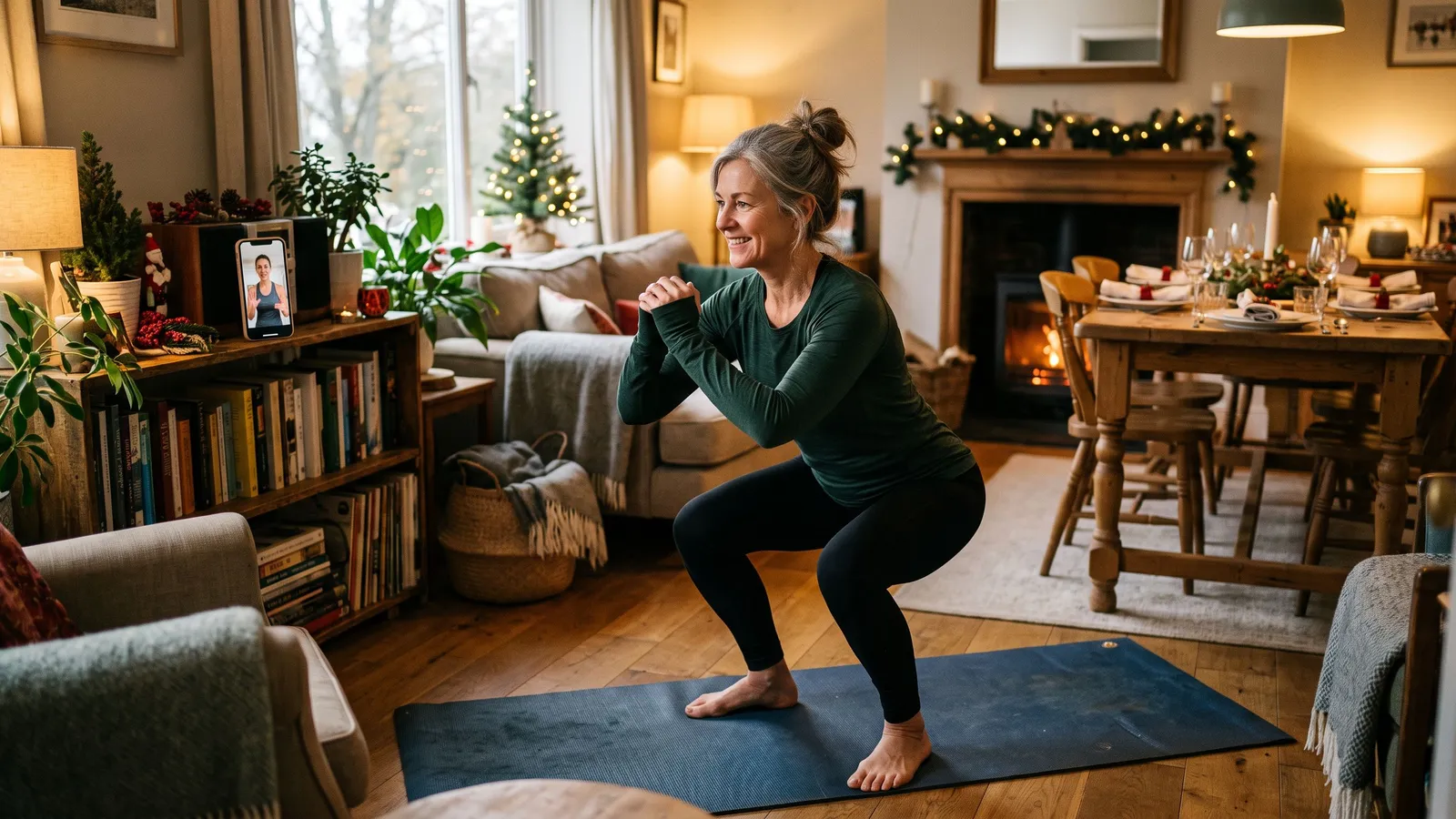
The best holiday workout plan is the one you can still follow in the worst week of December. For most busy people that means a minimum effective week: two 20-minute strength sessions plus short walks most days, booked into your calendar like any other appointment. The goal from Thanksgiving to New Year is to keep the habit alive, not to set records, so that January starts from a running stride instead of a standing start.
Why the holidays need a different plan
Between late November and early January, your schedule stops belonging to you. You might be hosting twelve people for Thanksgiving, flying for year-end client meetings, or juggling school concerts and office parties. A plan that assumes four gym sessions a week will break in the first week, and once it breaks most people stop entirely.
So we lower the bar on purpose. The CDC guidelines for adults call for at least 150 minutes of moderate activity a week and 2 days of muscle-strengthening activity. They also say you can spread activity out and break it into smaller chunks, and that some physical activity is better than none. That gives you a lot of room. Two short strength sessions and a daily walk get you most of the way there, and nothing on this plan requires a gym.
The minimum effective week
This is your floor. On a good week, do more. On a hard week, protect this and nothing else.
- Two strength sessions of about 20 minutes. Pick two days at least one day apart, for example Tuesday and Friday. Full body each time.
- Walks on most days. Ten to thirty minutes. After a big meal, between meetings, or around the airport terminal all count.
- One five-minute mobility break. Hips, upper back, calves. Especially useful after long drives and flights.
That is it. Hit the two strength sessions every week and you arrive in January with the habit intact.
Your six-week holiday workout plan
Here is how the season usually plays out, and how to adjust each week.
- Thanksgiving week. Do one strength session early in the week, before the shopping and cooking take over. On Thursday, take a family walk before or after the meal. If you are hosting, a 20-minute session the morning before guests arrive is a gift to yourself.
- Week two (early December). Back to two sessions. This is usually the calmest week of the season, so use it to lock in your two days and times.
- Week three. Parties start. Move strength sessions to mornings when evenings fill up. Keep walks short and daily.
- Week four. Travel and year-end deadlines peak for many people. Use the hotel-room routine below, and accept that a 12-minute session counts.
- Holiday week. Aim for one session and as much walking as the day allows. Invite family along; walks are the easiest thing to do together.
- New Year week. Two sessions again. You are not starting over, you are continuing.
20-minute home and hotel-room routine (no equipment)
This works in a living room, a guest room at your sister's house, or the space between a hotel bed and the desk. Warm up for 3 minutes by marching in place, rolling your shoulders and doing a few slow hip circles. Then do 3 rounds of the circuit below, resting about a minute between rounds.
- Squat to a chair or bed edge: 10 to 12 reps. Sit back slowly, stand up tall.
- Incline push-up: 8 to 12 reps with hands on a counter, desk or sturdy dresser. The higher the surface, the easier it is.
- Reverse lunge: 6 to 8 per side. Hold the wall or a chair for balance if you need it.
- Glute bridge: 12 to 15 reps on the floor or bed.
- Bird dog: 6 per side, slow and steady.
- Wall sit or forearm plank: 20 to 30 seconds.
Short on time? Do one round and stop. That is a 7-minute session, and it still keeps the habit. If you are new to strength work, our beginner training page explains how coaching works when you are just starting out.
How to schedule around travel and parties
The trick is to decide before the week starts, not on the day. Every Sunday, look at the next seven days and put your two sessions in the calendar with a time, not just a day.
- Go early. Mornings are the only part of a holiday day nobody else has claimed yet.
- Anchor to something fixed. "Right after my first coffee" or "as soon as I check into the hotel" works better than "sometime Tuesday".
- Pack for it. Shoes and one set of workout clothes at the top of the suitcase.
- Use the gaps. A layover, the hour before dinner guests arrive, the time while the turkey rests.
- Tell someone. Saying "I am doing my workout at 7, then I am all yours" protects the time without any guilt.
Many of the women we coach in their 50s are the ones hosting, cooking and driving everyone around in December. If that is you, the women over 50 page covers how we coach women at this stage, including strength work for bone health.
What to do on the worst weeks
Some weeks will go sideways. A cold, a cancelled flight, a family emergency, or simply too much on your plate. Here is the rule: on a bad week, do the smallest version that still counts.
- One round of the circuit instead of three.
- A 10-minute walk instead of 30.
- Five minutes of stretching on the hotel floor before bed.
Then let it go. Missing a week does not erase the strength you built in October. What costs people progress is not the missed week, it is the feeling that the plan is ruined so they might as well wait until January. If you are sick or injured, rest, and talk to your doctor before starting a new program if you have a health condition.
Apps, chatbots and why a booked session is easier to keep
Lots of people will ask ChatGPT or a fitness app for a holiday plan this year, and the plans are usually decent. Apps are cheap, always available and good at programming. The weak spot is not the plan. It is that an app cannot tell when your knee is caving on a lunge, notice that you look exhausted after a red-eye, or remember that your mother-in-law arrives Thursday.
A live session with a coach is the easiest workout to keep because it is an appointment with a person. Someone is expecting you at 7:00, will see your form in real time, and will change the session on the spot if your back is tight from the drive. In a month where every other plan gets pushed, that small bit of accountability is often the difference between two sessions a week and none. We compare the options in more detail in online vs in-person personal training.
A note on year-end FSA money
If you have a health flexible spending account, check your balance now. The IRS describes FSAs as generally "use-it-or-lose-it" plans; some employers offer a short grace period or a limited carryover, and some offer neither. Your plan administrator can tell you which rules apply. Personal training can qualify in some cases, and our HSA/FSA page explains how HipTrain members use those funds.
How HipTrain helps
HipTrain pairs you with a real certified coach for live 1-on-1 video sessions on your phone or laptop, from $14 per session. Your coach builds the holiday weeks around your calendar, runs your 20-minute sessions from your living room or hotel room, and checks in when the week gets hard. If you want help keeping the habit through New Year, book a free trial session and plan your first two weeks together.
FAQ
How many workouts a week do I need during the holidays?
Two short full-body strength sessions plus walks on most days is a realistic floor. It lines up with the CDC's guidance of two days of muscle-strengthening activity a week, and it is small enough to survive travel and parties.
Can I really work out in a hotel room with no equipment?
Yes. Squats to the bed, incline push-ups on the desk, lunges, glute bridges and planks cover the whole body. Twenty minutes is enough, and one round of the circuit still counts on a busy day.
Should I try to lose weight between Thanksgiving and New Year?
For most people the better goal is to keep training consistently and enjoy the season. A steady habit through December makes any January goal easier to start. If you have a specific medical goal, talk to your doctor.
What if I miss a whole week?
Start again with the next scheduled session, not next month. Do one round of the circuit and a walk, and you are back on the plan.