How to keep your workout motivation in fall and winter
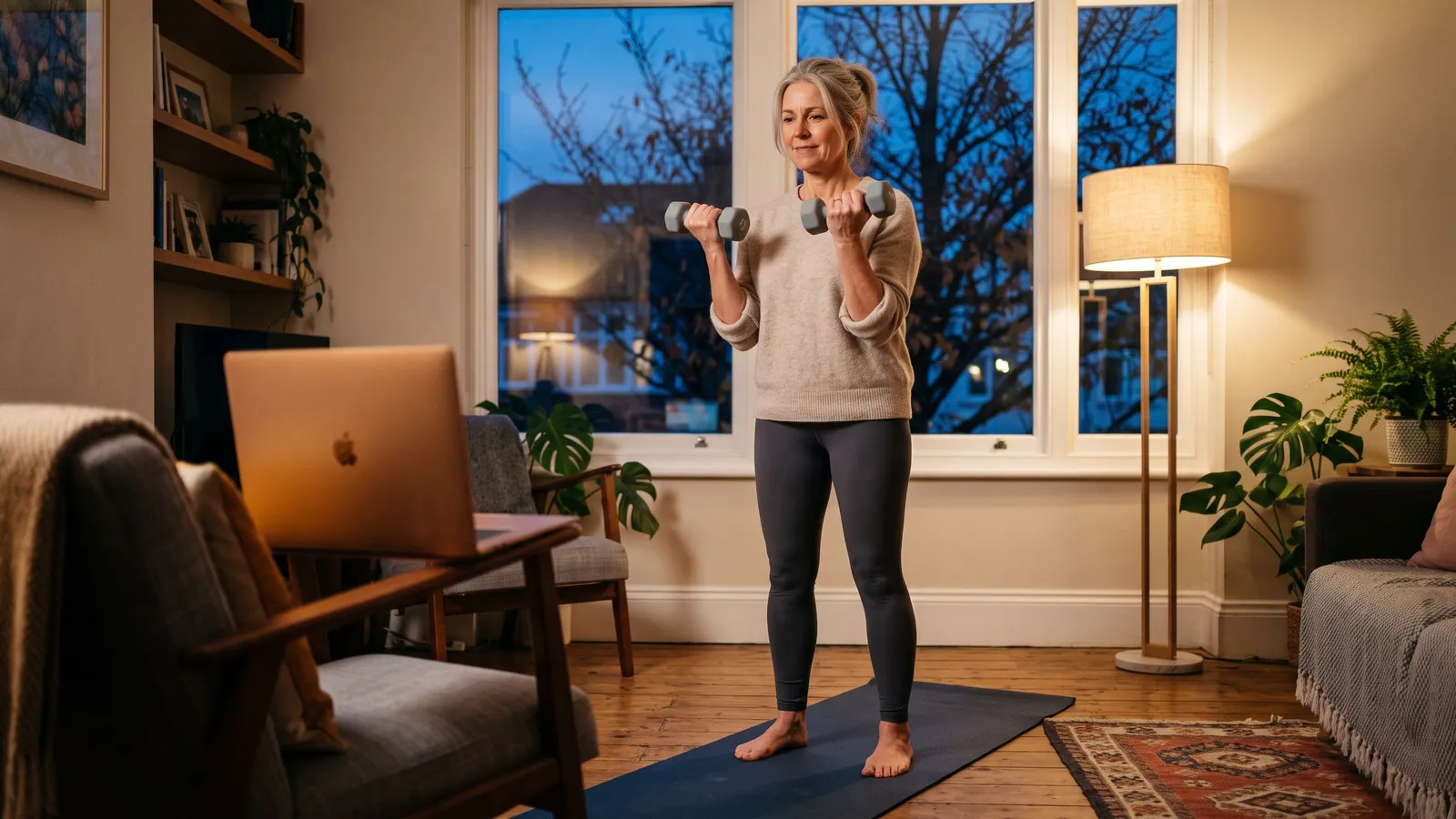
Workout motivation in fall and winter does not vanish because you got lazy. It fades because the cues that carried you through summer, daylight after work and a predictable calendar, disappear in November. The fix is fewer decisions, not more willpower: a standing appointment with a person, some morning light, sessions short enough to finish, and a plan for the weeks you will miss.
Why workout motivation in fall and winter drops
It is dark at 5. When the clocks go back in early November, the after-work window that felt like evening now feels like night. Your body reads that as a signal to wind down, and the couch wins more often.
Light itself matters. The National Institute of Mental Health notes that winter-pattern seasonal affective disorder usually starts in late fall or early winter, and that shorter daylight hours may lower serotonin, a brain chemical that helps regulate mood. Most people never meet the bar for a diagnosis, but plenty feel a milder version. If a low mood lasts for weeks, talk to your doctor.
Routine breaks. Between Thanksgiving, the December holidays and New Year travel, most of us have six to eight weeks where no two weeks look alike. A habit that depends on a fixed routine does not survive that.
Then there is the quiet math of skipping. One missed Tuesday becomes a missed week, the week becomes two, and restarting starts to feel like a project. None of this is a character flaw; it is a predictable seasonal pattern you can plan for, the way you plan for snow.
What actually works from November to February
After years of coaching people over video, these are the tactics that hold up. Pick two or three, not all six.
- Make an appointment with a person. A workout you plan is a suggestion. A workout someone is waiting for is a commitment. It can be a friend who walks with you at 7:00, a class with a sign-in sheet, or a coach on a video call. A real human expects you, so "do I feel like it?" never gets asked.
- Get light in the morning. Step outside for ten minutes with your coffee, even if it is gray. NIMH describes light therapy for people with SAD as sitting in front of a 10,000-lux light box for about 30 to 45 minutes, usually first thing in the morning. Ask your doctor before buying a light box.
- Shorten the session. The CDC's guideline for adults is 150 minutes of moderate activity a week plus at least two days of muscle-strengthening, and it says you can break it up into smaller chunks of time and that some physical activity is better than none. Twenty focused minutes you finish beat the hour you keep postponing.
- Build a home corner and lower the cost of starting. A mat, dumbbells or a band, and a spot where your phone or laptop can stand at chest height. Lay out clothes the night before and decide tonight what tomorrow's session is, so you only have to show up. In the dark and cold, the drive to the gym is the obstacle, not the workout.
- Track streaks loosely. Aim for three sessions a week and mark them on a calendar you can see. Then use the only rule that matters: never miss twice. Two in a row is the start of a slide, so the next day's session gets shorter, not cancelled.
- Define your minimum. Write down the smallest workout that still counts: ten squats, ten push-ups against the counter, a brisk 12-minute walk. On the worst day of December, do the minimum and call it a win.
Apps, chatbots and a human on the other side of the screen
Fitness technology has never been better or cheaper. The ACSM 2026 Worldwide Fitness Trends report, based on a survey of 2,000 clinicians, researchers and exercise professionals, puts wearable technology at number one and mobile exercise apps at number four. Ask a chatbot such as Grok for a four-week beginner plan and you get a reasonable one in seconds, at 11 p.m.
One line of expert commentary in that report is worth reading twice: app effectiveness depends on user engagement and program quality. The plan was never the hard part. Following it on a dark Tuesday is.
A live human changes a few specific things an app cannot. Someone watches your squat and says "sit back, heels down" before your knee complains. Someone remembers your mother is visiting and you want to feel strong in the family photo, and adjusts the session to fit. And someone is on the call at 7:00 waiting for you, which is the entire accountability mechanism in one sentence.
The research supports the mix. A 2024 meta-analysis in Sports Medicine of 34 randomized trials in adults over 60 found both supervised and unsupervised programs safe, with similar attendance, and modest additional gains in strength and related measures from supervision; the authors call for more research. The exercises work either way; supervision helps a little, and a scheduled person is what gets you to do them.
HipTrain itself runs on an app and a video call; that is how a coach in another city ends up in your living room. Use the apps. Just make sure one person in the system is a person.
A simple weekly template for the dark months
Here is a frame many of my clients use from November through February. Swap days; keep the shape.
- Monday, 20 to 30 minutes: full-body strength, scheduled with a person. If only one session survives the week, it is this one.
- Tuesday: a daylight walk at lunch, 10 to 20 minutes.
- Wednesday, 20 minutes: a second strength session, or mobility if you are sore.
- Thursday: rest, or another lunch walk.
- Friday, 20 to 30 minutes: strength or cardio, scheduled with a person if you can. Fridays before holiday weeks are where routines die, so book this one.
- Saturday or Sunday: something you enjoy. A hike while there is light, dancing in the kitchen, raking leaves with intent.
- Holiday weeks: drop to two sessions plus your daily minimum. Decide this in advance so it feels like the plan, not a failure.
If you missed two weeks
First, nothing is broken. Two weeks off after a cold, a trip or a hard stretch at work is a pause, not a reset. The goal is not to make up lost sessions, just to make the next one easy.
- Book one session in the next 48 hours, ideally with a person. Do not plan the month. Plan Thursday.
- Make it 60 to 70 percent of your old effort: lighter weights, fewer rounds, finish feeling like you could have done more.
- Skip the audit. You do not need to weigh yourself, review what went wrong or buy anything. Just move.
- Tell someone. A text that says "back at it Thursday at 7" to a friend, a partner or your coach turns a private intention into a small public one.
- Do your minimum for the rest of that week, then pick the template back up the week after.
How HipTrain helps
HipTrain is live 1-on-1 personal training over video with a real certified coach, from $14 per session, on your phone or laptop. Your coach sees you, fixes your form on the spot, adjusts when you are tired, and is on the call at the time you booked, which is the appointment-with-a-person tactic built in. Sessions are HSA and FSA eligible, useful before year end, and HipTrain is rated 5.0 on Google. See how we work with women over 50 and beginners, compare us with an in-person trainer, or book a free trial session and put a real person on your calendar this week.
FAQ
Is it normal to lose workout motivation in winter?
Yes. Less daylight and a disrupted calendar push against routine, and NIMH notes that shorter days can affect mood and energy for many people. Plan for the dip: fix your sessions to a person and a time, and shrink them rather than skipping them.
Is a 20-minute workout worth doing?
Yes. The CDC says weekly activity can be broken into smaller chunks and that some physical activity is better than none. Twenty minutes of strength work three times a week is a real program.
Should I work out in the morning or the evening in winter?
Whichever one you will actually keep. Mornings pair well with light exposure and are less likely to be cancelled by a long day; evenings suit people who can protect the slot. The schedule you keep beats the one on paper.
Can an AI app or chatbot replace a personal trainer?
It can replace the plan. What it cannot do is watch your form in real time, adjust mid-set, notice when you are hurting or wait for you at 7:00. If showing up is your problem, the human piece is what matters most.