Is walking enough exercise after 50? An honest answer
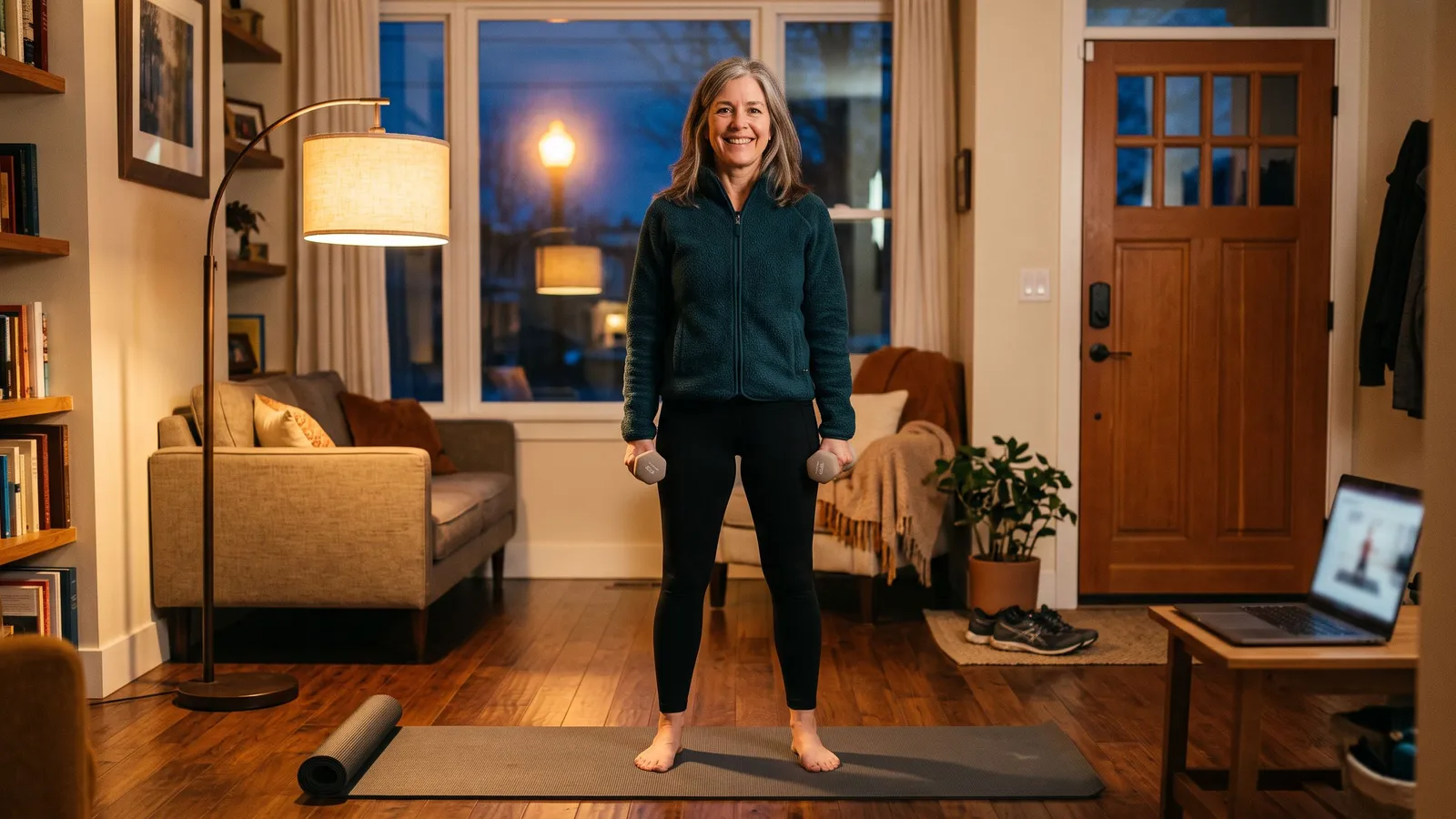
Is walking enough exercise? For your heart and your lifespan, daily walking does a lot, and you should keep it. But on its own it does not cover the things that change fastest for women after menopause: muscle strength, bone density, balance and the quick power that catches you when you trip. Keep the walks, then add two short strength sessions and a few minutes of balance work each week.
Is walking enough exercise? What the guidelines say
The CDC's guidelines for adults ask for two things, not one. Adults need at least 150 minutes of moderate-intensity activity a week, and brisk walking is the example the CDC gives. Adults also need 2 days of muscle-strengthening activity each week.
For adults 65 and older, the CDC's older-adult guidance adds a third piece: activities to improve balance, alongside the same 150 minutes and the same 2 strength days, working all major muscle groups.
So if you walk briskly 30 minutes most days, you are probably covering the first line of the CDC adult guideline. The second line, strength, is the part most daily walkers miss.
Next question: How much strength training does a woman over 50 actually need?
What daily walking does well
Please do not stop walking. The evidence for it is strong.
A 2022 meta-analysis in Lancet Public Health pooled 15 cohorts and found that more daily steps went with a steadily lower risk of death from any cause. Compared with people in the lowest group (a median of about 3,550 steps a day), people averaging about 7,840 steps had a 45% lower risk. For adults 60 and older, the benefit leveled off at roughly 6,000 to 8,000 steps a day. For adults under 60, it leveled off at roughly 8,000 to 10,000.
Walking is also easy on the joints, clears your head, and is social. A walk with a friend is a workout you rarely skip. So walking earns its place. The question is what it leaves out.
Next question: What does a full fitness plan for a woman over 50 include?
What walking leaves out after menopause
Lower estrogen changes the picture. The Office on Women's Health puts it simply: you lose bone faster after menopause, which raises your risk of osteoporosis and broken bones. Here is where walking falls short.
- Strength. Muscles grow and hold on when asked to do more than usual, and a walk asks your legs for what they already do. Your arms, back and core get very little from a walk.
- Bone density. A 2013 meta-analysis in Menopause looked at 10 trials and concluded that walking as the only exercise had no significant effect on bone density at the lumbar spine, the wrist or the whole body in peri- and postmenopausal women. It did find a benefit at the hip (femoral neck) when programs ran longer than 6 months. Compare that with the LIFTMOR trial: postmenopausal women with low bone mass who did supervised, heavy resistance and impact training twice a week for 30 minutes gained 2.9% spine bone density over 8 months, while the low-intensity group lost 1.2%.
- Balance. Walking on flat pavement does not challenge balance much. According to the CDC, 1 in 4 older adults report falling every year, and falls are the leading cause of injury for adults 65 and older. Balance is a skill, and skills need practice.
- Power. Power is strength done quickly: getting up off the floor, stepping fast to catch a stumble, climbing stairs with groceries. A steady walk never asks for it.
Next question: How do you strength train safely if you have low bone density?
What to add, and in what order
You do not need to add everything at once. Here is the order I use with clients who walk every day.
- Two strength sessions a week, 20 to 30 minutes. Start with five movements: a squat to a chair, a hip hinge (like a deadlift with light dumbbells), a row, a push (wall or counter push-up), and a carry (walk holding two bags or dumbbells). Two or three sets each. Pick a weight where the last two reps feel hard but your form stays clean.
- Add load over time. When 12 reps feel easy, go a little heavier. This is the part people skip, and it is the part that builds muscle and bone. Our strength training coaches spend a lot of time here.
- Balance, 5 minutes most days. Stand on one foot while you brush your teeth. Walk heel to toe down the hallway. Step over a shoe and back. Hold onto a counter until you do not need it.
- A little power, once you are steady. Stand up from a chair quickly and sit down slowly. Do small step-ups at a brisk pace. If your doctor has cleared you, gentle hops or heel drops can follow, as in the LIFTMOR program, but build up to them.
If you have osteoporosis, joint pain or a heart condition, talk to your doctor before starting a new program, and ask what to avoid.
Next question: What does a live strength session with a coach look like?
A simple weekly plan that keeps your walks
This week covers all four gaps and still has a walk every day.
- Monday: 30-minute walk. Strength session A, 25 minutes.
- Tuesday: 30-minute walk. 5 minutes of balance.
- Wednesday: Brisk 30-minute walk with a few 1-minute faster stretches. 5 minutes of balance.
- Thursday: 30-minute walk. Strength session B, 25 minutes, with chair stands and step-ups for power.
- Friday: 30-minute walk. 5 minutes of balance.
- Saturday: A longer, easy walk with a friend.
- Sunday: Rest or a gentle stroll and some stretching.
Keep a day between strength sessions. If two feels like a lot at first, start with one.
Next question: Which balance exercises are worth doing every week?
When it is dark by 5: indoor options for November
Now that the clocks have changed, many evening walkers lose their light. Some easy swaps:
- Move the walk. A lunchtime walk keeps the daylight and breaks up a desk day.
- Walk indoors. Malls, big stores and indoor tracks all count. So do laps around your house during a phone call.
- Swap a walk for a strength session. On a cold, dark evening, 25 minutes in the living room with two dumbbells is a good trade.
The holidays are also when routines slip. A session on the calendar with someone expecting you is easier to keep than a plan in your head.
Next question: What can you do at home with no equipment?
Apps, chatbots and a live coach
Plenty of women now ask ChatGPT or a fitness app for a strength plan, and the plans are often decent. Apps are cheap, always on, and good at reminders and tracking your walks.
What an app cannot do well is watch you. A live coach sees that your knees cave on the squat, that your back rounds on the hinge, or that you are holding your breath. A coach notices you look tired, remembers your sore shoulder from last week, and knows when you are ready for heavier weights. That last part, adding load safely, is exactly where walkers who start lifting tend to stall.
Next question: Is online personal training as good as an in-person trainer?
How HipTrain can help
HipTrain pairs you with a real, certified coach over live video, on your phone or laptop, from $14 per session. Your coach builds your strength and balance work around the walks you already do, corrects your form in real time, and keeps you on track through the holidays. Many of our clients are women over 50, and sessions are HSA and FSA eligible, which helps if you have FSA money left before year end. Book a free trial session and bring your walking routine with you.
FAQ
Is walking 10,000 steps a day enough exercise?
It covers aerobic activity well, and the Lancet Public Health meta-analysis found the benefit for adults 60 and older leveled off around 6,000 to 8,000 steps. It still does not meet the CDC's 2 days a week of muscle-strengthening activity, so add strength work too.
Can walking build muscle after 50?
Walking helps you keep some leg strength if you were very inactive before, but it does little for your arms, back and core, and it rarely gets harder over time. Resistance training with added load is what builds muscle.
Is walking enough for bone density after menopause?
Not by itself for most sites. A 2013 meta-analysis found walking alone did not significantly change spine, wrist or whole-body bone density in peri- and postmenopausal women, with a hip benefit only in programs longer than 6 months. Progressive strength and impact work did better in trials like LIFTMOR.
Should I walk before or after strength training?
Either works. A short walk makes a good warm-up. If your legs feel heavy, lift first while you are fresh and walk later.