Should you work out with a cold? A simple guide
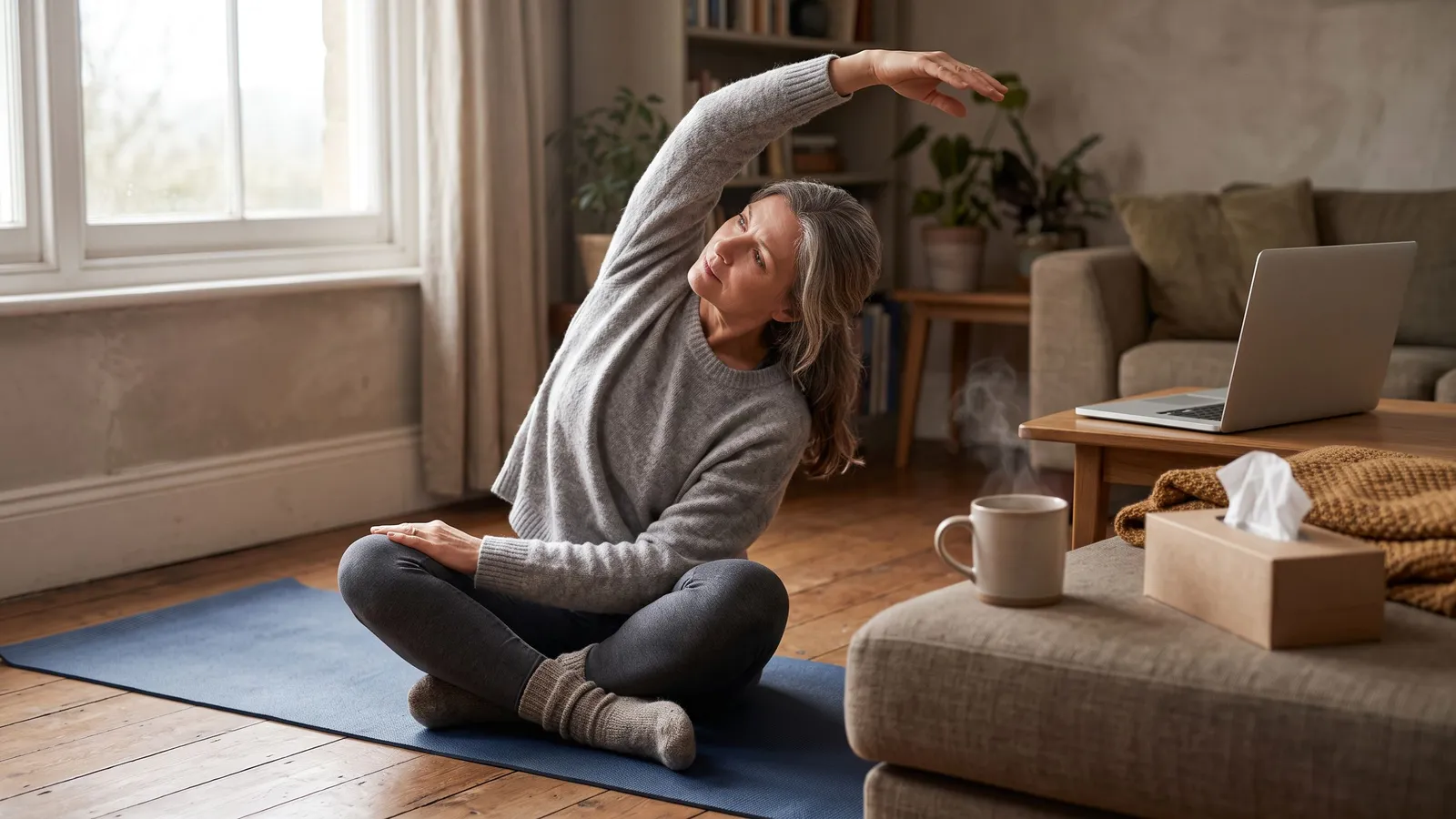
Should you work out with a cold? If your symptoms sit above the neck, like a runny nose, congestion or a mild sore throat, and you have no fever, light exercise is usually fine as long as you cut the effort back. If you have a fever, chest symptoms, body aches or a stomach bug, rest. Missing a few days will not undo the work you have already done.
It is late November, so cold and flu season is overlapping with holiday travel, crowded airports and family gatherings. Here is how to decide, day by day, what your body can handle.
The neck check: should you work out with a cold?
Many doctors use a rule of thumb called the "neck check." A sports medicine physician at Cleveland Clinic puts it simply: if your symptoms are above the neck, it is probably safe to exercise. NYU Langone gives the same advice, with a caveat: even then, take it easy and shorten or soften the workout, especially if your energy is low.
Above the neck usually means:
- Runny or stuffy nose
- Sneezing
- A mild sore throat
Below the neck usually means:
- Fever or chills
- Chest tightness, chest congestion or a hacking, productive cough
- Body aches or muscle aches
- Nausea, vomiting or diarrhea
The neck check is a guide, not a guarantee. If congestion makes breathing a struggle, or you feel worse ten minutes in, stop.
Next question: What does a low-impact workout look like on a low-energy day?
When to skip the workout and rest fully
Rest is the right call when you have any below-the-neck symptom, and especially a fever. As the NYU Langone specialist explains, a fever means your body is already working hard to fight infection, and exercise raises your heart rate and body temperature and adds to the risk of dehydration. The idea that you can "sweat out" a fever is a myth.
The American Lung Association suggests skipping the workout for a day or two if you have a fever, chills, body aches or a cough, and taking a few days off if below-the-neck symptoms point to something like the flu. With a stomach bug, rest and fluids come first.
Talk to your doctor before exercising if your symptoms are severe, if they keep getting worse, or if you have a heart or lung condition such as asthma, COPD or heart disease. Cleveland Clinic also says to stop and rest right away if you notice chest pain, trouble breathing, dizziness or feeling faint. If you are taking anything for your symptoms, ask your doctor or pharmacist how it affects exercise for you.
Next question: How should a beginner start exercising safely with a coach?
Gentle options for a mild-cold day
On a day when the neck check passes and you feel up to moving, think "about half." Cleveland Clinic's advice is to cut your effort by at least 50% until you feel ready to build back up. A few options that fit:
- A 15 to 20 minute walk. Indoors or out, at a pace where you could chat easily. Cleveland Clinic notes that even 10 or 15 minutes of walking can help clear your head.
- Mobility and stretching. Hip circles, cat-cow, gentle twists, shoulder rolls and calf stretches.
- Light strength at lower effort. Fewer sets, lighter weights or bodyweight only, and longer rests. Sit-to-stands from a chair, wall push-ups and glute bridges work well.
Skip intervals, heavy lifts and anything that makes you breathe hard, and drink water before and after.
Next question: What does a mobility session with a live coach include?
How to ease back in after being sick
Once your fever breaks, NYU Langone recommends waiting at least a few days before you go back to exercise, and then building up slowly. It can take a few weeks to return to your usual intensity and length, and that is normal.
A simple ramp that works for most people:
- First session back: about half your usual time and effort. Mostly walking, mobility and a few easy strength moves.
- Next few sessions: add a set or a few minutes each time, as long as you feel fine that evening and the next morning.
If a cough lingers, energy crashes after workouts, or symptoms come back, ease off again. The NHS says to see a doctor if cold symptoms do not improve after 10 days, if you have a cough for more than 3 weeks, or if you feel short of breath or have chest pain.
Next question: How do you rebuild strength safely with a coach watching your form?
Training around other people in cold and flu season
Colds spread easily. According to the NHS, you are infectious until all your symptoms are gone, which usually takes 1 to 2 weeks, and germs from coughs and sneezes can live on hands and surfaces for 24 hours. If you do train somewhere shared, a little care goes a long way:
- Wash your hands with soap and warm water before and after.
- Wipe down mats, benches and weights after you use them.
- Cough or sneeze into a tissue and bin it right away.
- If you have a fever or feel too unwell for normal activities, stay home. The NHS advises avoiding contact with others until you feel better.
Training at home this time of year keeps your routine going without sharing germs with a class before a holiday trip.
Next question: How does live online personal training work over video?
Why missing a few days does not erase your progress
Many people worry that a week off means starting over. It does not. Fitness fades slowly, so a short sick break costs very little. As Cleveland Clinic's physician puts it, even if you take a couple of days off, you will bounce back pretty quickly.
What matters more is that you come back. Treat rest as part of the plan, and book your first session back before you are fully well so the restart is already decided.
For women in their 40s to 60s, steady strength work over months and years matters far more than any single week. A cold in December is a blip.
Next question: What does a steady strength routine look like for women over 50?
What a live coach changes on a sick week
Fitness apps and AI chatbots are cheap, always available, and can write a reasonable plan. But on the morning you wake up stuffy and tired, most apps simply play the workout that was scheduled.
A live coach handles that morning differently:
- Adjusts on the spot. You say your throat is scratchy, and the session becomes lighter weights, more rest and fewer reps.
- Swaps the plan. If you look tired on camera, a coach can turn the session into mobility and breathing work instead.
- Tells you to rest. If you have a fever, a good coach sends you back to bed rather than letting you push through.
- Checks in after. A person remembers you were sick last week, asks how you feel, and plans the ramp back so you do not jump straight into your hardest session.
That last part is accountability in both directions. Someone expects you at 7:00, and that same someone tells you when to stay in bed.
Next question: Is live online training as good as an in-person trainer?
How HipTrain can help
HipTrain pairs you with a real certified coach for live 1-on-1 video sessions on your phone or laptop, from $14 per session. Your coach sees how you are moving, lightens the session when you are under the weather, and helps you ease back in after being sick, all from home, with no shared equipment. If you still have FSA money to spend before year end, check our HSA/FSA eligibility page. When you feel well enough, book a free trial session.
FAQ
Is it OK to work out with a sore throat?
A mild sore throat with no fever is an above-the-neck symptom, so light exercise is usually fine. Lower the intensity and stop if you feel worse.
Can you sweat out a cold?
No. Doctors at NYU Langone call sweating out a fever a myth. A hard workout will not speed up recovery and can add stress when your body is already fighting an infection.
How long should I wait to exercise after a fever?
NYU Langone recommends waiting at least a few days after your fever breaks, then building back up gradually over the following weeks. Check with your doctor if you have a heart or lung condition.
Will a week off ruin my progress?
No. A few days or a week of rest while you are sick will not erase the strength and fitness you have built. Ease back in at about half effort and build up gradually over the next few weeks.