Strength training for menopause: a kind, practical guide
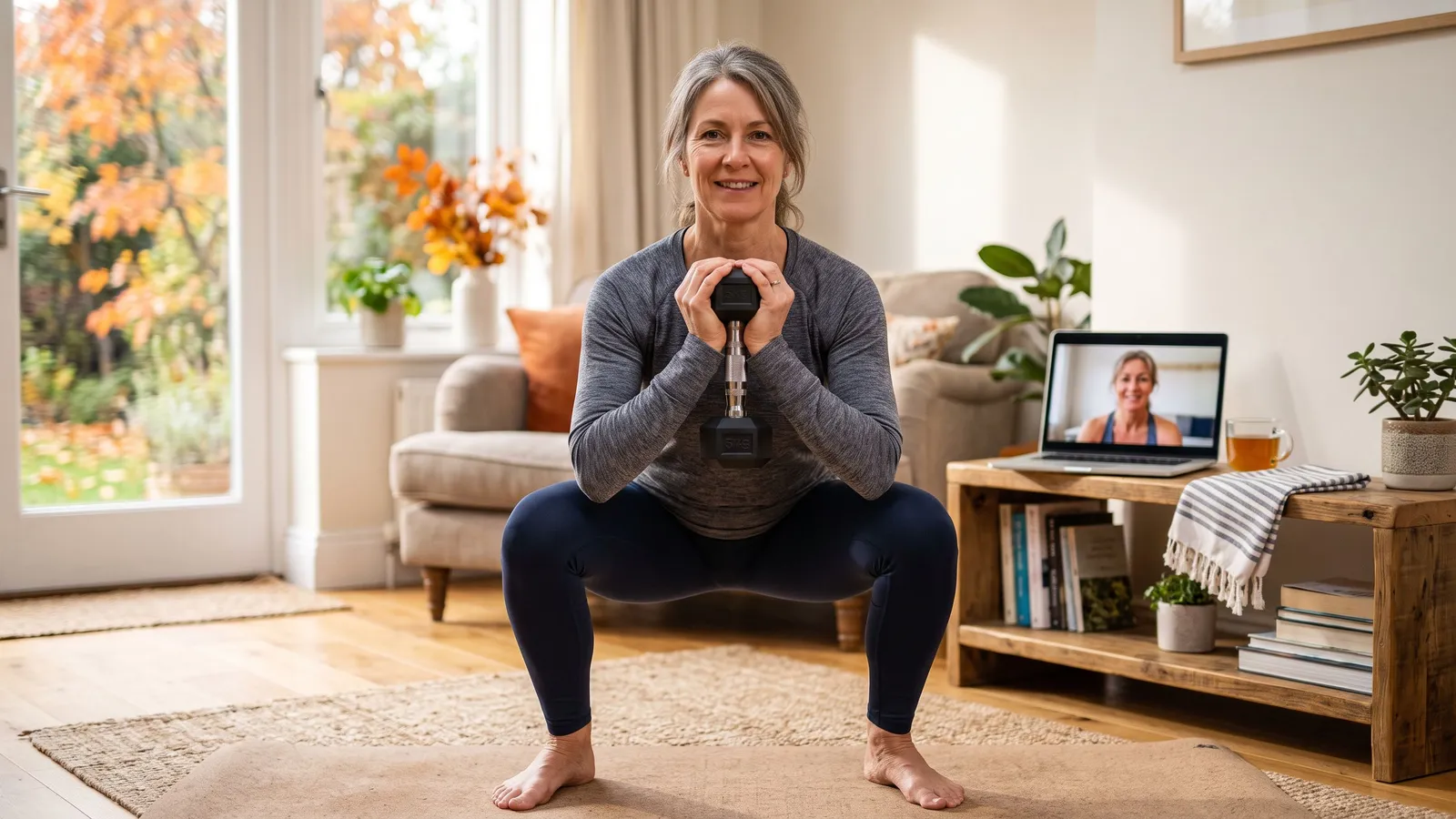
Strength training for menopause works best when it is simple: two or three sessions a week, a handful of big movements like squats, rows and presses, and weights that slowly get a little heavier. It helps protect the muscle and bone that tend to slip away in these years, and many women find they sleep and feel better too. You do not need a gym, and you do not need to lift like an athlete on day one.
If you are in perimenopause or past your last period and wondering where to begin, this guide is for you. It is general information, not medical advice, so check in with your doctor before starting, especially if you have a heart, joint or bone condition.
Why strength matters more in these years
Menopause is officially reached after 12 months without a period, and the most common age is between 45 and 55, according to MedlinePlus. The years leading up to it, perimenopause, usually begin in your 40s and can last several years.
Muscle and bone
A 2025 systematic review in the journal Bone opens with a plain statement: the highest rate of bone and muscle loss occurs during the menopause transition. The U.S. Office on Women's Health notes that you lose bone faster after menopause, which raises the risk of osteoporosis and broken bones.
The same review found that in early post-menopause, strength training improved bone density at the hip and spine. In the two perimenopause studies it did not, and all six studies were small in number and low in quality, so the honest message is this: lifting is one of the best tools we have, not a guarantee.
One well-known trial, LIFTMOR, followed 101 postmenopausal women with low bone mass, average age 65. Those who did two supervised 30-minute sessions a week of high-intensity lifting and impact work for eight months gained 2.9% lumbar spine bone density on average, while the low-intensity home group lost 1.2%. Only one minor adverse event was reported. The researchers stressed that training was highly supervised, which is a big part of why it was safe.
Balance and everyday strength
Stronger legs and hips make it easier to get off the floor, carry groceries up the stairs and catch yourself on an uneven sidewalk. In LIFTMOR, the lifting group also improved on every functional test, including standing up from a chair five times and the timed up-and-go walk.
Sleep and mood
Trouble sleeping is a common menopause symptom. A systematic review of 13 studies found that regular resistance exercise improved sleep, with the biggest benefit for sleep quality. On mood, a JAMA Psychiatry meta-analysis of 33 randomized trials with 1,877 participants found resistance training was linked to a meaningful drop in depressive symptoms. Neither was specific to menopause.
How to start strength training for menopause
The CDC recommends muscle-strengthening activity at least 2 days a week, working legs, hips, back, abdomen, chest, shoulders and arms, plus 150 minutes of moderate activity like brisk walking. Here is how that looks in real life.
- Pick two or three days. Put them on your calendar like appointments. Leave at least one day between sessions at first.
- Use compound moves. These work several muscles at once, so you get more from less time. Think squat, hinge, push, pull and carry.
- Start lighter than you think. Choose a weight you could lift for 10 to 12 smooth reps with two or three left in the tank. Your first month is about learning the patterns.
- Add a little load over time. When the last reps feel easy for two sessions in a row, add a rep, a set or a slightly heavier weight. This is progressive overload, and it is what tells bone and muscle to adapt.
- Keep it joint-friendly. Squat to a chair or box, do push-ups against a counter, use resistance bands for rows, and hinge with a dumbbell instead of a heavy barbell. Swap anything that pinches for a version that does not.
- Warm up for five minutes. March in place, circle your arms and hips, and do a few easy squats.
A sample week
This is a starting template for a healthy beginner. Each strength session takes about 30 to 40 minutes.
- Monday, strength A: goblet squat to a chair, dumbbell row, incline push-up against a counter, glute bridge, farmer carry. Two or three sets of 8 to 12 reps, carries for 30 to 40 steps.
- Tuesday: 30-minute brisk walk.
- Wednesday, strength B: dumbbell Romanian deadlift, step-ups onto a low step, band pull-apart, seated or standing overhead press, side plank on knees.
- Thursday: walk plus 10 minutes of balance work, like standing on one leg near a counter and heel-to-toe walking.
- Friday, strength A again, aiming for one more rep or a little more weight than Monday.
- Weekend: something you enjoy, a hike, a bike ride, gardening, or rest.
If three sessions feel like too much, do two. Consistency over months matters far more than any single workout.
Common worries, answered
"I don't want to get bulky"
This is the worry we hear most, and it rarely happens. What most women notice is firmer legs, better posture and that daily tasks feel easier.
"My joints already ache"
Achy knees and shoulders are common in midlife, and the right strength work can help them feel better, not worse. Start with a smaller range of motion, slow down the lowering phase and choose variations that feel good. Sharp pain is a signal to stop and adjust. Ongoing pain is worth a visit to your doctor or a physical therapist.
"What about hot flashes mid-workout?"
Be realistic here. The Menopause Society's 2023 nonhormone position statement did not recommend exercise as a treatment for hot flashes, because the evidence was limited or inconsistent. So lift for your muscles, bones and mood, and manage the heat practically: train in a cool room with a fan, wear layers you can peel off, keep water close, and take a longer rest between sets when a flash hits. Morning sessions work well for many women.
"I'm too tired"
On low-energy days, do one set of each exercise and call it a win. A short session keeps the habit alive.
Why a live coach watching your form helps
Workout apps and AI chatbots can write you a reasonable plan in seconds, and they are cheap and always available. That is useful. What they cannot do yet is watch your knees cave on a squat, see your lower back round on a deadlift, or notice you are flushed and need a longer break today.
That matters more in menopause than at almost any other time. You want to add load steadily for your bones, and you want to do it with good form. The LIFTMOR results came from supervised training, and supervision is exactly what a live coach on video gives you. A coach also remembers that your left knee was cranky last week, adjusts the plan when sleep was rough, and expects you at 7:00 on Wednesday. That last part keeps a lot of people going.
Fall is a good moment to start. The evenings are getting darker, the holidays are coming, and if you have FSA money left before the year ends, HipTrain sessions may qualify. See our HSA and FSA details.
How HipTrain helps
HipTrain pairs you with a certified personal trainer for live 1-on-1 video sessions on your phone or laptop, from $14 per session. Your coach watches every rep, adapts moves for your joints and energy, and builds the load up at a pace that suits you. Many of our clients are women in their 40s, 50s and 60s, and our training for women over 50 page explains how we work with this stage of life. New to lifting? Our beginner programs start right where you are. Book a free trial session and see how it feels.
FAQ
Is it too late to start strength training after menopause?
No. The LIFTMOR trial worked with women whose average age was 65, and they improved bone density and everyday function. Start light, learn good form and progress slowly, and talk to your doctor first if you have osteoporosis or another condition.
How many days a week should I strength train during menopause?
Two or three days a week is a good target. The CDC recommends at least two days of muscle-strengthening activity that works all major muscle groups.
Should I lift heavy or light weights?
Start with weights you can control for 10 to 12 reps, then build gradually. Heavier, well-coached lifting showed bone benefits in research, but it was closely supervised and participants were screened first, so get there step by step with guidance.
Can I do strength training for menopause at home?
Yes. Dumbbells, a resistance band and a sturdy chair cover every movement in the sample week above. A coach on video can check your form and setup from your living room.