Personal trainer app for postpartum: short, live sessions that fit around a baby
Get the all-clear from your provider, start gently, and train at home in short live sessions that can move when the baby's schedule does.
After having a baby, getting back to exercise can feel both urgent and impossible. You want to feel like yourself again, but you're tired, your body has changed, and leaving the house takes an hour of planning. A trainer app can bring a coach to your living room. This guide explains how to pick one and how HipTrain's app works. It's written by HipTrain, so we're not neutral, and the health guidance below comes from ACOG and the CDC, linked at the end.
The short answer
First, get cleared by your health care provider. Then look for a personal trainer app where a certified trainer works with you live, starts gently and builds slowly, and lets you train in short sessions you can reschedule. HipTrain offers live 1:1 video sessions in the app in 30 or 60-minute lengths, from about $14 a session, and your first 30-minute session is free with no credit card needed. HipTrain trainers are personal trainers, not doctors or pelvic health specialists, so your provider's advice comes first.
Start with your provider's okay
The American College of Obstetricians and Gynecologists (ACOG) says that if you had a healthy pregnancy and a vaginal delivery, it's usually safe to begin exercising a few days after giving birth, or as soon as you feel ready. If you had a cesarean birth or complications, ACOG says to ask your ob-gyn when it's safe to start again.
Everyone heals on a different timeline. Before your first session, check with your doctor or health care provider, and ask them two things: when you can start, and whether there's anything you should avoid for now. Then share their answer with your trainer.
What to look for in a postpartum trainer app
- A gentle start. ACOG suggests starting with simple exercises that strengthen major muscle groups, including the abdominal and back muscles, and adding moderate exercise gradually. An app that throws you straight into jump squats isn't that.
- Someone watching your core and pelvic floor. On a live call, a trainer can see if you're holding your breath, bracing too hard or arching your back, and tone things down. Recorded videos and plan-only apps such as Ladder can't see you. Coach-in-the-app services such as Future and Trainwell check in later, by message.
- Short sessions. ACOG notes that even 10 minutes of exercise benefits your body. A 30-minute session is realistic during a nap.
- Easy rescheduling. Babies don't read calendars. Moving a session should be quick and guilt-free.
- The same trainer. Someone who remembers your delivery, your sleep and how last week felt can plan the next step sensibly.
How live sessions work in the HipTrain app
- Answer four quick questions about your goals, how often you'd like to train, the times that work and your starting level. "Recently had a baby" is useful context for your trainer.
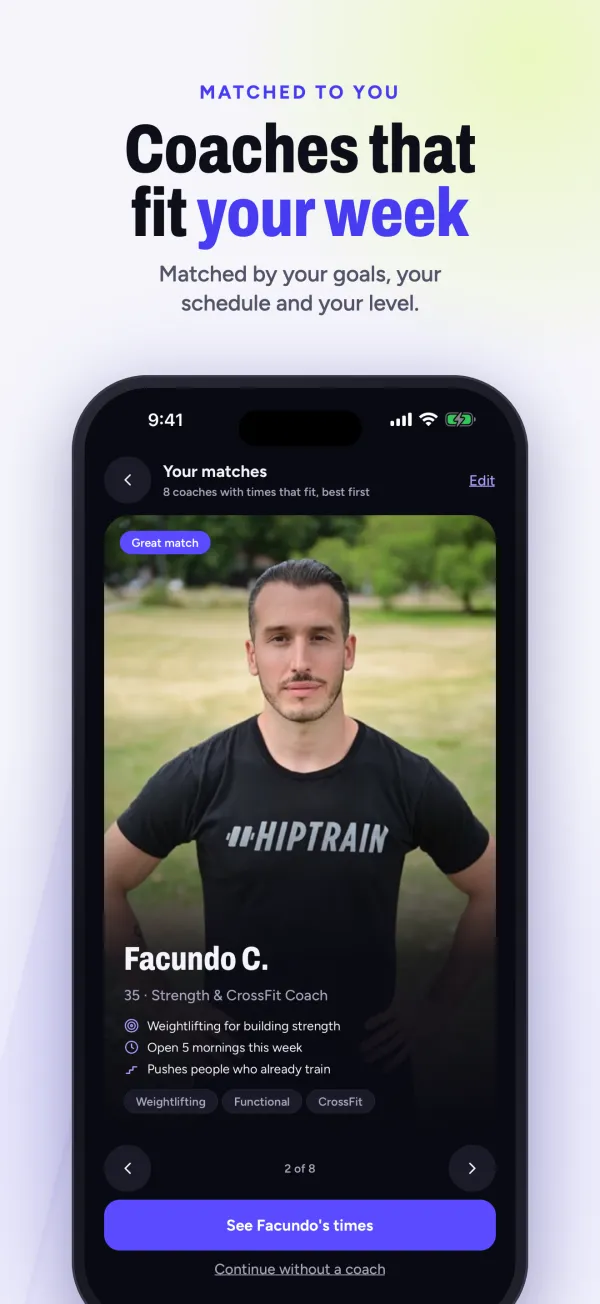
- Browse your matches. You'll see trainers who fit your week, with a photo, their focus and real open times.
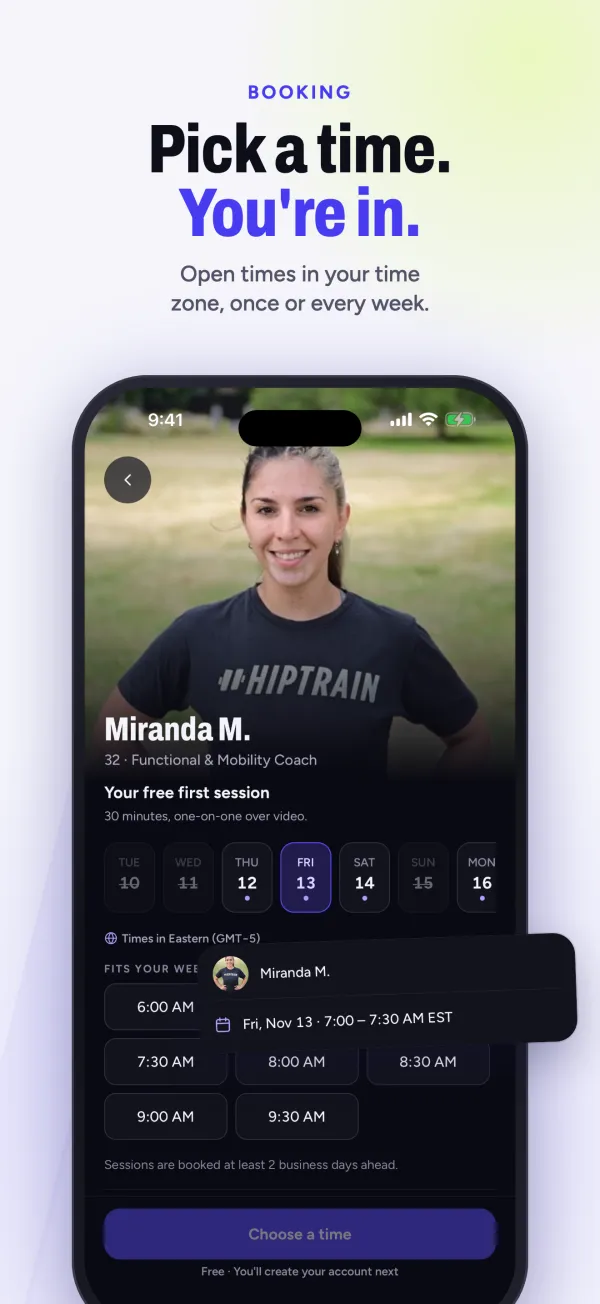
- Book around naps. Times show in your time zone. Book one session at a time while your schedule is unpredictable, or repeat weekly once things settle.
- Prepare in a few minutes. Your trainer reads your goals first, and a short video explains what to wear, how to set up your space and what you need. Usually that's a mat or towel and a bit of floor.
- Join from your phone. You get a reminder, your trainer sends the link in chat, and you tap Join.
The app works on iPhone, iPad, Android and in a web browser. The HipTrain app page has the full rundown.
Training with a baby in the house
Real life will interrupt you. A few things make that easier on a live call:
- Pause without leaving. If the baby wakes, you can mute or turn your video off for a minute, then come back. Your trainer can switch to something easy while you settle them.
- Baby in view is fine. Training with the baby on a play mat nearby is okay. Your trainer can work around a few interruptions.
- Use headphones. Wired or Bluetooth headphones let you hear your trainer without waking a sleeping baby.
- Move, don't cancel. Rough night? Reschedule from the Sessions tab. Sleep matters too.
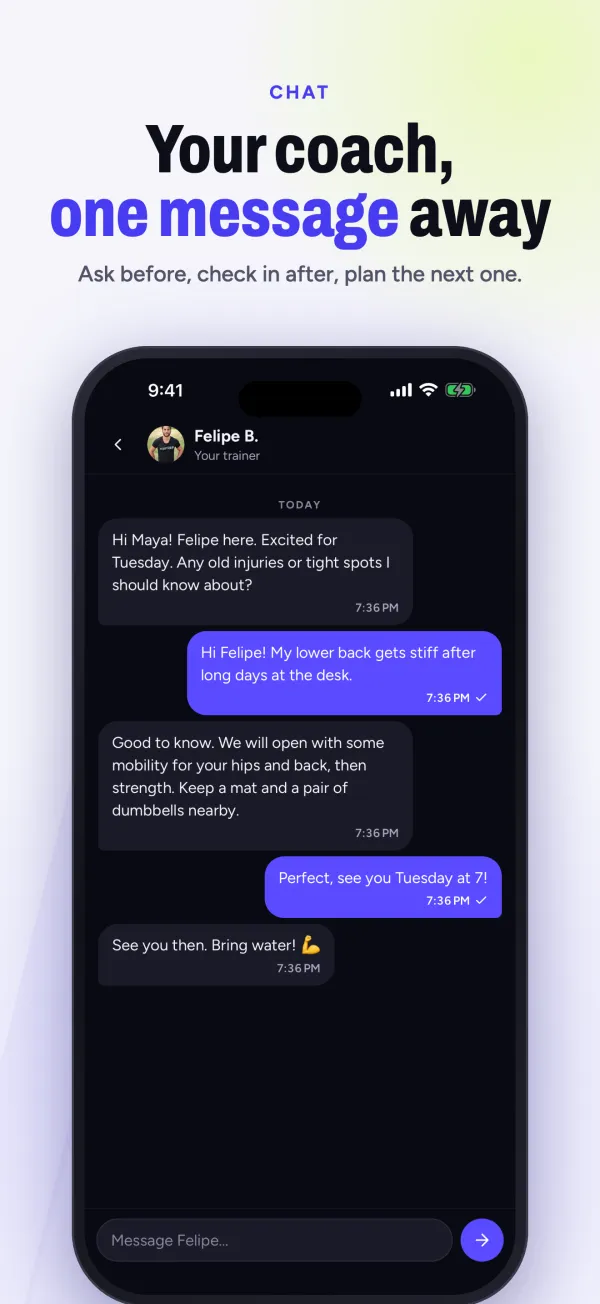
- Message ahead. While you have sessions booked, you can chat with your trainer. A quick "slept two hours, go easy" helps them plan.
Core and pelvic floor: go slowly
ACOG describes Kegel exercises as pelvic muscle exercises that help with bladder and bowel control. Pregnancy and birth change how your core and pelvic floor work, so early sessions often focus on breathing, posture and gentle strength rather than crunches or jumping.
A few ground rules:
- ACOG says to stop exercising if you feel pain. Tell your trainer right away.
- If you notice leaking, a feeling of heaviness, or pain during or after exercise, pause and talk to your provider before going further.
- Expect the plan to change week by week. Slow progress is normal, not a failure.
Our trainers aren't pelvic health specialists, and they won't act like they are. If your provider refers you to a specialist, follow that plan first. For more on HipTrain for new moms, see postpartum training with HipTrain.
What a member says
"Also I appreciate the ease of adjusting our schedule and that he is ok with 30 minute sessions." (Helene B., Google review)
What it costs
Most new parents find 30 minutes the easiest length to protect. One a week is $59.49 a month, and two is $119.99. For comparison, a typical in-person trainer costs $75 or more per session, before you count the drive or a sitter. HipTrain is HSA / FSA eligible, though you'll usually need a Letter of Medical Necessity; see our HSA / FSA page and check your plan.
When HipTrain isn't the right fit
- You need specialist pelvic floor care. Our trainers are certified personal trainers. Ask your provider for a referral to a specialist.
- Your days are too unpredictable for any set time. If even a booked 30 minutes is hard right now, a self-paced app might suit this season better.
- You want a postpartum video library or meal plans. We don't offer either.
- You want in-person help. HipTrain is video only.
- You want lots of reviews. We have about 30 App Store ratings (4.7 stars) and a smaller trainer roster than the largest apps.
Questions
When can I start working out after giving birth?
ACOG says it's usually safe a few days after a healthy pregnancy and vaginal delivery, or as soon as you feel ready. After a cesarean or complications, ask your ob-gyn. Either way, get your provider's okay before your first session.
How much exercise is recommended postpartum?
The CDC recommends at least 150 minutes a week of moderate aerobic activity during the postpartum period, like brisk walking. ACOG suggests aiming for 20 to 30 minutes a day and building up slowly.
Can I work out with my baby in the room?
Yes. Keep the baby safe and in sight, and let your trainer know there may be pauses.
Is an online trainer safe after a C-section?
Only once your ob-gyn says you're ready. Tell your trainer about the surgery so they can avoid moves that strain your belly early on.
Will a trainer help me get my pre-baby body back?
We won't promise that, and you should be wary of anyone who does. A trainer can help you rebuild strength and energy safely, at a pace that fits your recovery.
Cleared and ready for a gentle start? Try your first HipTrain session free. No credit card needed.
We checked app features and prices in November 2026. Things change, so confirm before you sign up. You may also like our trainer app guide for beginners and our look at a strength training app at home.